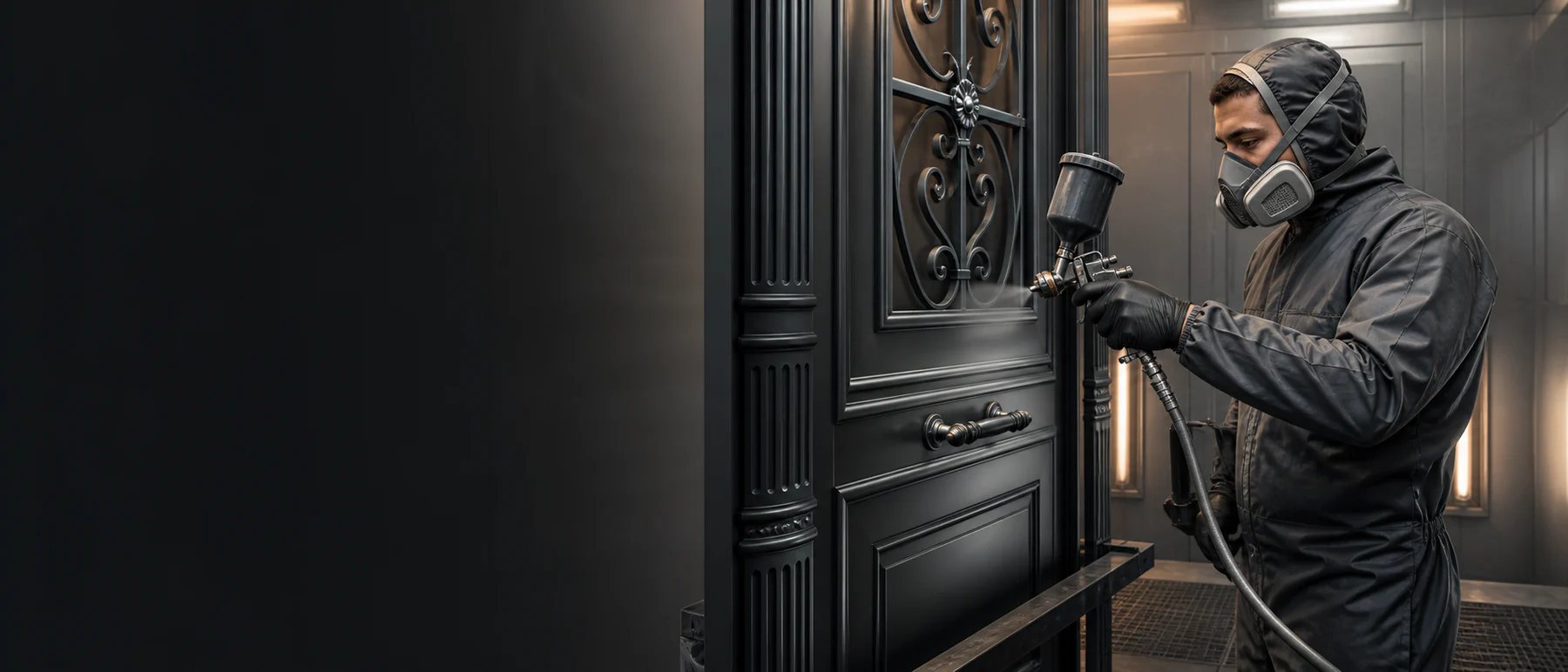
Doors, gates, and railings
- What We Do
- We remove rust and peeling paint, smooth the edges of the remaining paint, prime exposed metal, and apply paint.
- Result
- A smooth finish in your selected color that protects properly prepared metal from moisture and rust.
Important: A finish may not last as long if rust is hidden inside or water collects in cavities. Sharp edges require especially careful preparation.
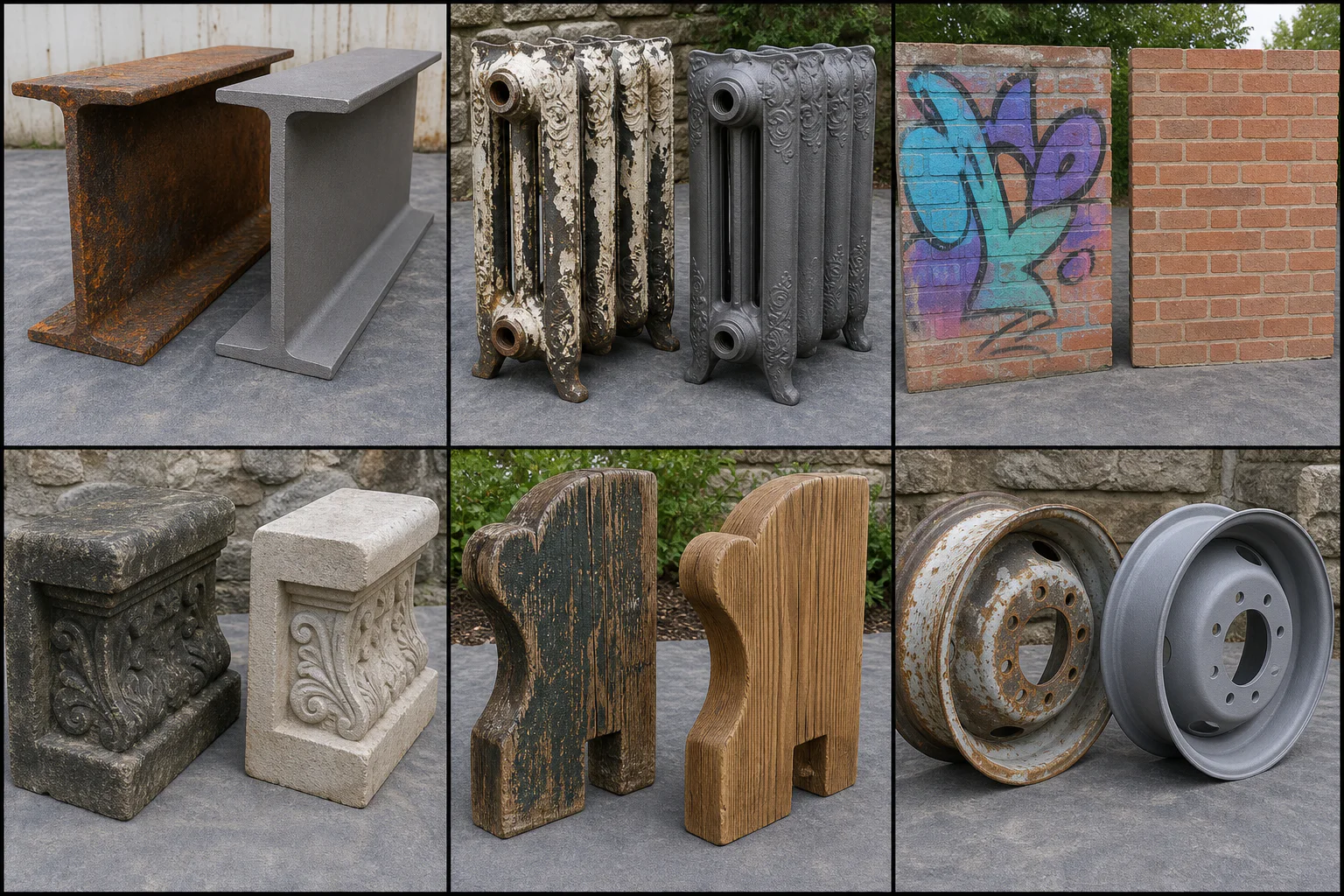
Frames and metal structures
- What We Do
- We degrease and clean the surface, then apply primer and paint.
- Result
- A smooth protective finish suited for outdoor, indoor, or working conditions.
Important: Paint cannot fix cracks, poor welds, or severely thinned metal. We select the number of coats for the intended use.
Equipment housings
- What We Do
- We remove oil and loose coatings, mask areas that cannot be painted, and choose paint suited to the equipment's operating conditions.
- Result
- A smooth coating that protects the housing and makes it easier to maintain.
Important: We do not paint electrical contacts, nameplates, sensors, threads, or hot surfaces. These areas are confirmed before work begins.
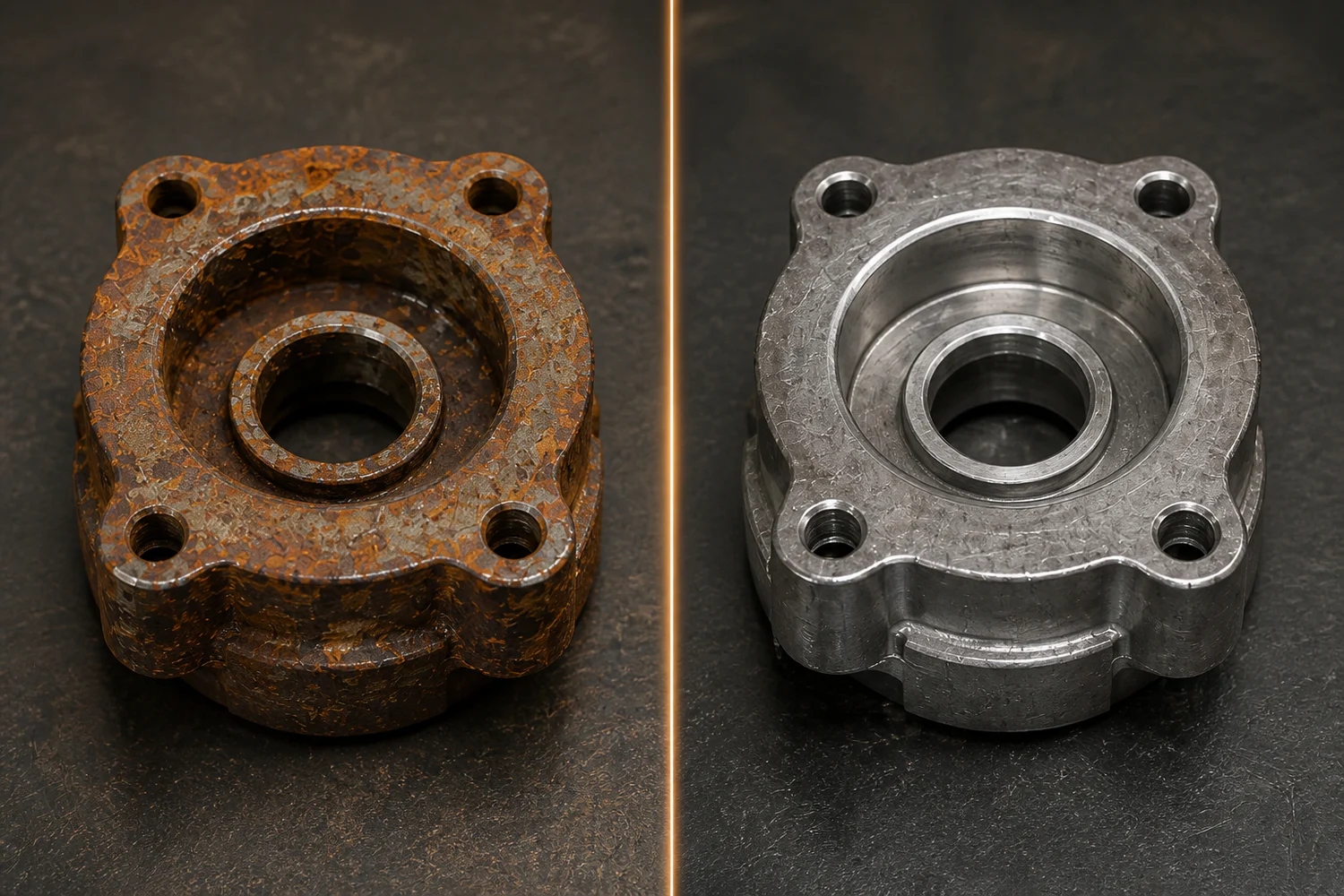
Galvanized steel, aluminum, and stainless steel
- What We Do
- We degrease the surface, prepare it carefully, and apply a primer made for that specific metal.
- Result
- A smooth finish in your selected color over a primer suited to the metal.
Important: Incorrect preparation or primer can cause peeling, so we test the system first.
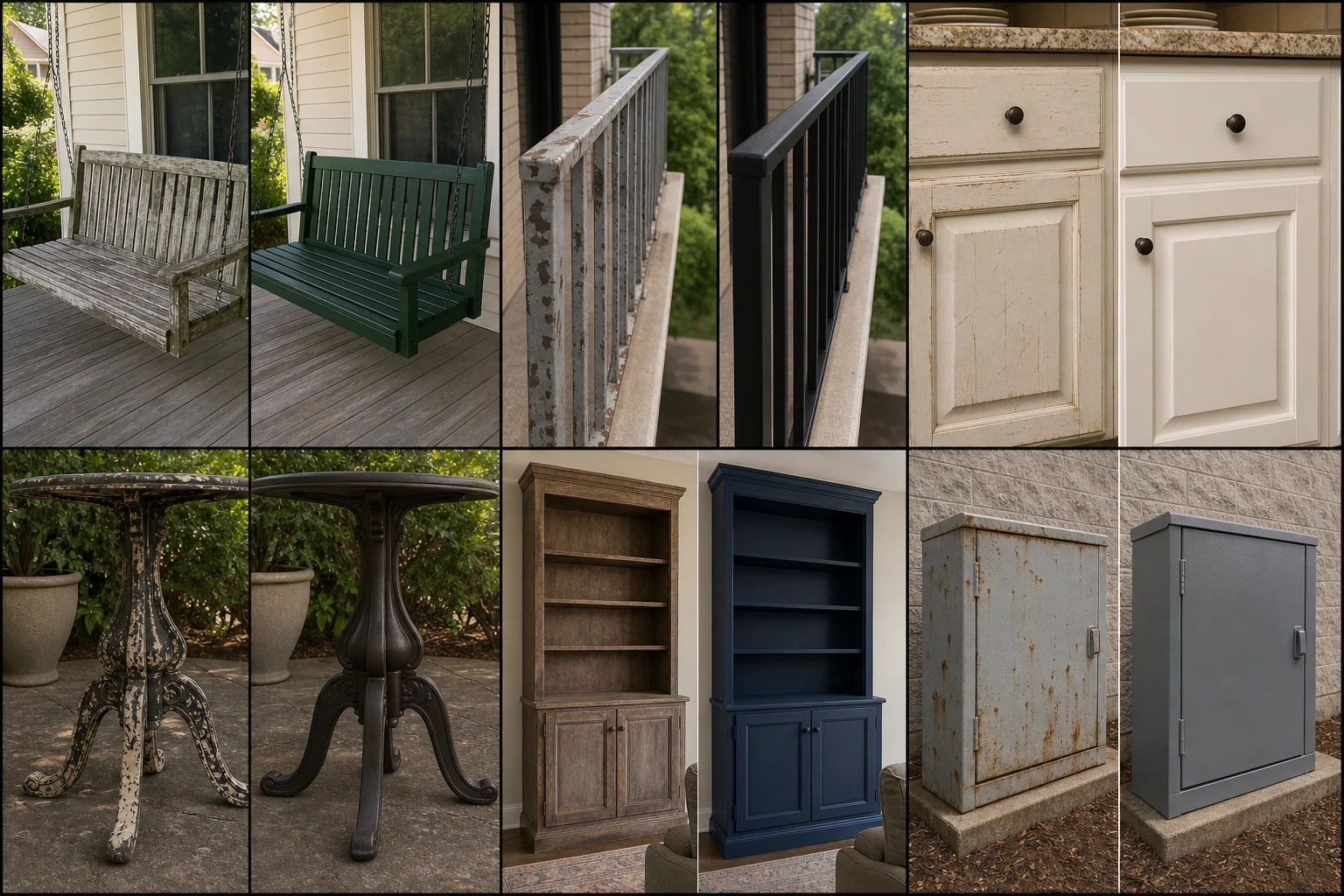
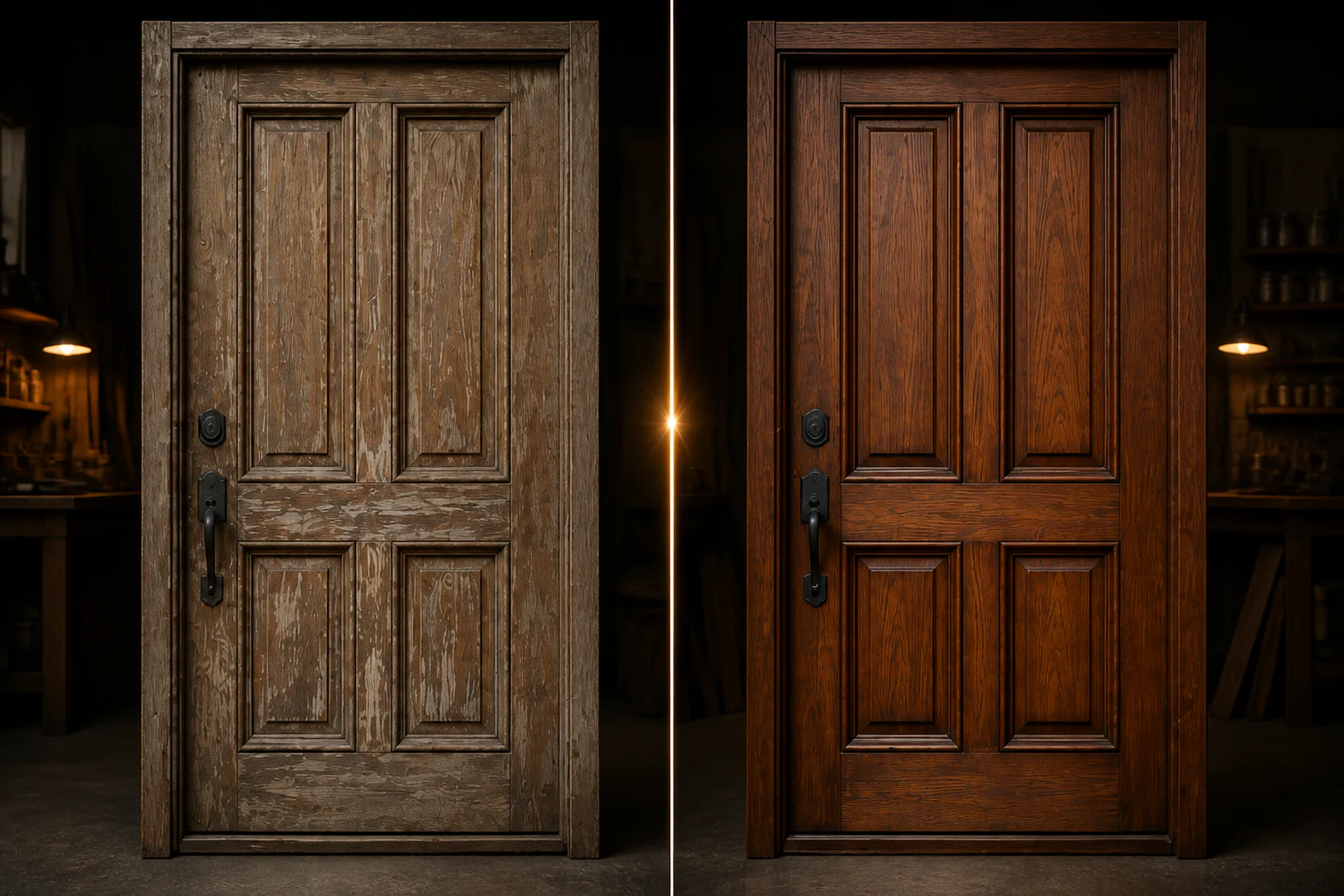
Wood doors, benches, and furniture
- What We Do
- We clean the surface, remove loose paint, repair minor defects, prime, and paint.
- Result
- A smooth finish in your selected color, suited to where the item will be used.
Important: Damp, rotten, or weakened wood must be dried and repaired first. Valuable veneer and antique finishes require a restoration approach.
Repainting over an existing finish
- What We Do
- We check the existing paint for adhesion, remove loose areas, and prepare the remaining finish for repainting.
- Result
- If the old paint is in good condition and compatible with the new coating, it does not need to be removed completely.
Important: Blistered paint, hidden rust, or damp and damaged wood may require more thorough cleaning or repair.