
Wood Furniture Restoration

We inspect the material, furniture condition, and existing finish. Then we recommend preserving the finish, repairing damaged areas, or completely updating the appearance.

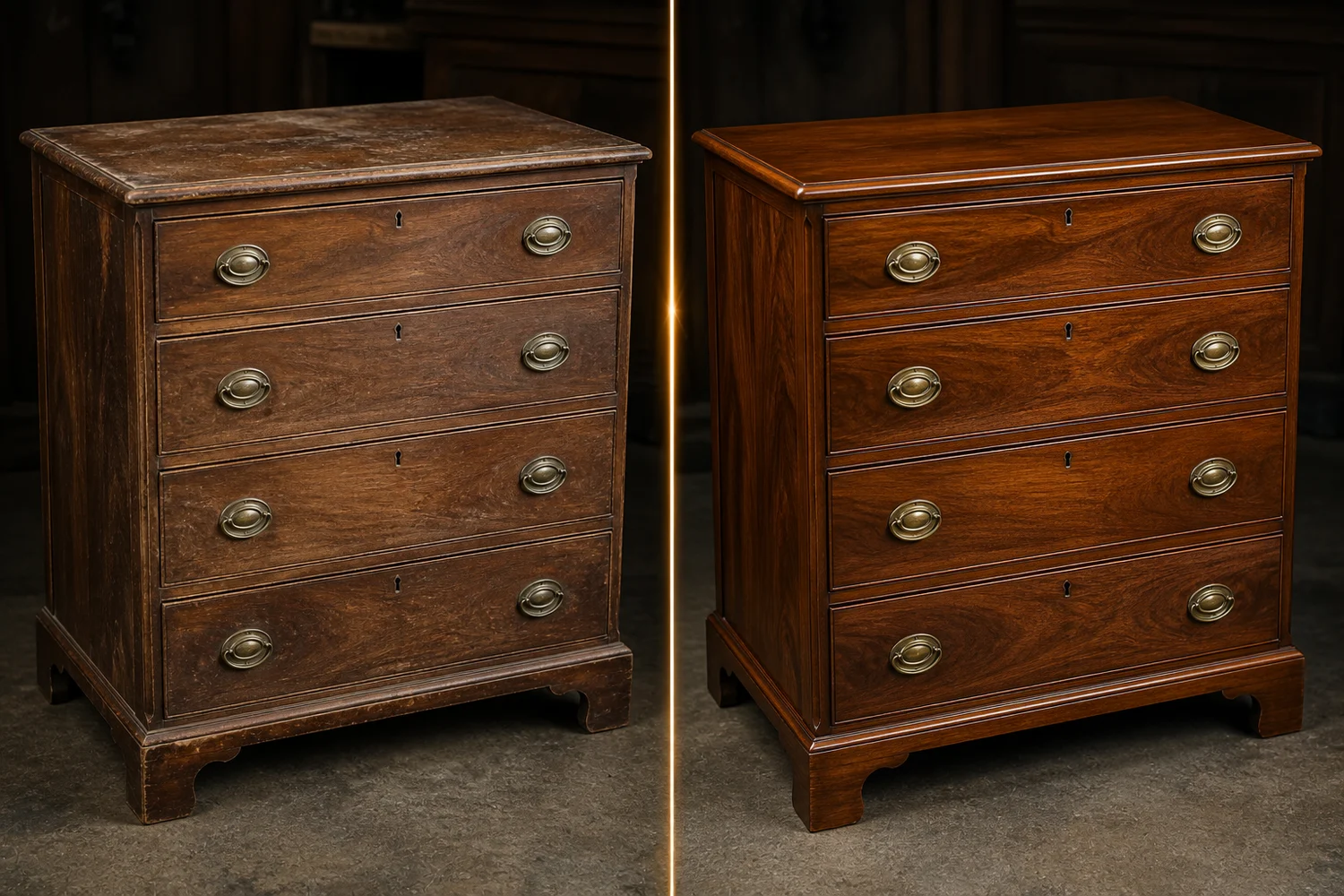
Refinishing a wood dresser

Furniture we restore

The right method depends on the material, shape, and existing finish. We first inspect the furniture and test the selected method in an inconspicuous area.

Restored wood dresser result

Solid-wood tables and tops

What We Do
We remove loose finish, smooth minor damage, restore the color, and renew protection.
Result
A renewed surface with visible natural wood grain.

Important: Deep burns and water or ink stains may remain visible or require a darker color.
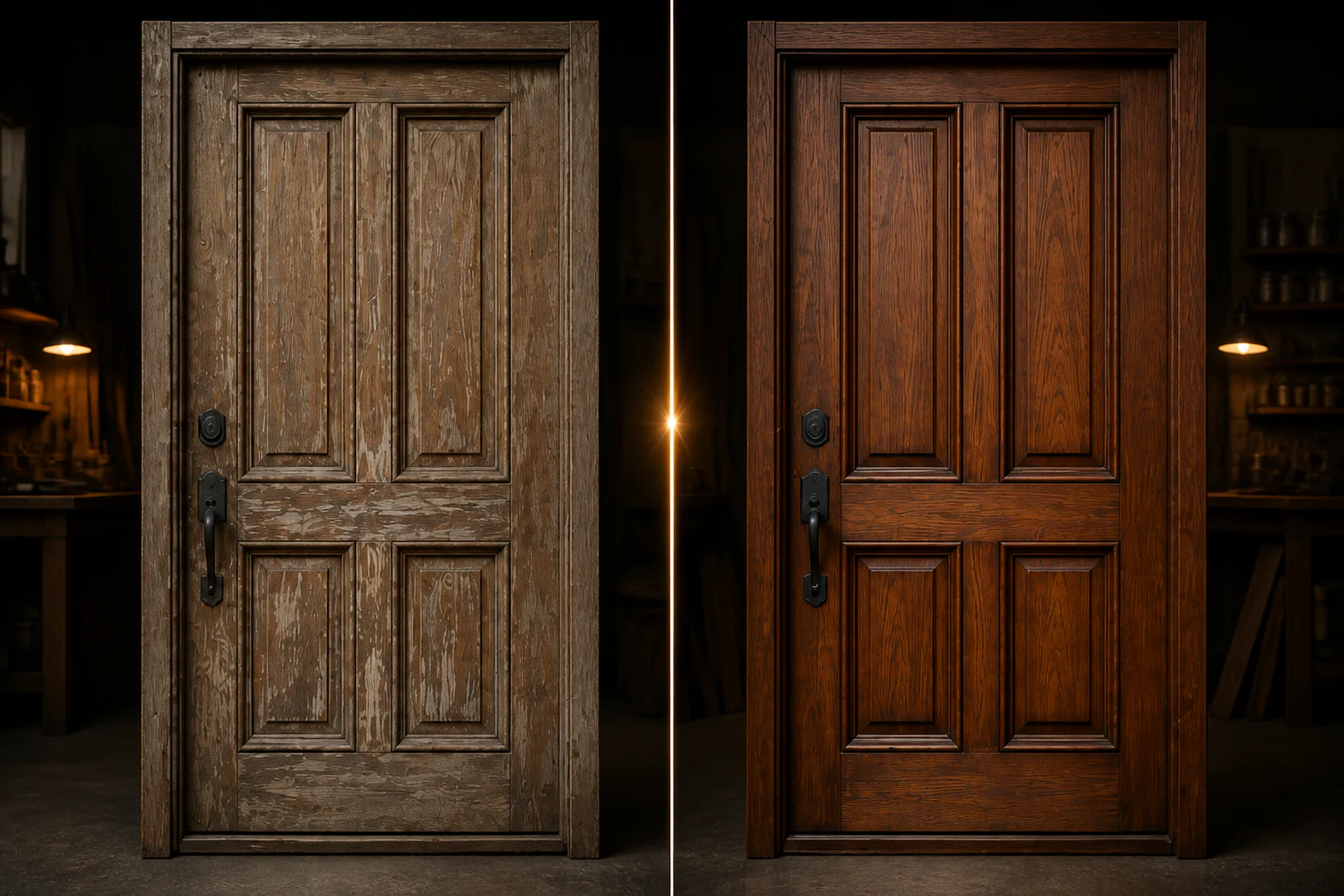
Veneered dressers and cabinets

What We Do
We secure loose edges, sand gently, even out the color, and renew the finish.
Result
Preserved veneer grain with a more even color.

Important: Thin veneer cannot be sanded deeply. Missing pieces require a separate repair.

Chairs and loose joints

What We Do
We clean and reglue accessible joints, then renew the finish.
Result
Reinforced joints and a renewed finish.

Important: Broken or severely warped parts may require partial or complete replacement.

Carved furniture

What We Do
We clean by hand, preserve crisp edges, and restore color only where needed.
Result
Clear ornamentation without losing the original design.

Important: Aggressive sanding and thick paint can hide fine raised details.

Painted and vintage furniture

What We Do
We check the finish for adhesion, then clean and renew only selected areas.
Result
A renewed finish that preserves original details and patina when agreed in advance.

Important: Hand-painted artwork and original patina require specialized restoration and cannot be sanded like ordinary paint.

Furniture with glass, metal, or upholstery

What We Do
Before working on the wood, we cover glass and upholstery and remove accessible parts on site.
Result
Wood components are renewed while glass, upholstery, and hardware are protected.

Important: Built-in elements can limit access. On-site part removal and upholstery work are discussed separately.

We remove the old finish completely only when a partial repair would not be reliable.

Why Choose This Service

We preserve what is in good condition

If the existing finish is in good condition, we repair only the damaged areas.

Methods for different materials

Solid wood, veneer, and engineered wood each require different treatment methods.

We consider how the furniture is used

Everyday and antique furniture require different materials and repair methods.

What to Consider

Before work begins, we check the material, the old coating, and any nearby surfaces that need protection.

  1. Heavy sanding can damage veneer, decorative inlays, and carving.

  2. Complete removal of the original finish is irreversible.

  3. Signs of insects, mold, or serious moisture require a separate inspection.

  4. Repair of loose or broken joints is included only after inspection.

  5. Work involving upholstery, glass, or metal components is discussed and quoted separately.

How It Works

  1. Photos and project details

    Send us an overall photo, a close-up, and a short description of what you need done.

  2. Inspection

    We check the material, existing finish, damage, and access to the work area.

  3. Test area

    When needed, we test the chosen method on a small, inconspicuous area.

  4. Project approval

    We explain the work, the expected result, and the price before we begin.

  5. Service

    We protect the surrounding area, complete the work, and monitor the surface throughout the process.

  6. Final review

    We review the finished surface with you and explain how to care for it.

What Affects the Price

Price depends on more than size. We also consider the material, surface condition, and access to the work area.

View Pricing Details

Item type, size, and complexity

Age and condition

Solid wood, veneer, and decorative elements

Condition of the joints

Preserving or completely replacing the finish

Hardware, glass, and upholstery

Floor level, access, and protection of the room

What to Send on WhatsApp

Send us a few photos and describe the work you need in your own words.

  • An overall photo of the object
  • A close-up of the damage or buildup
  • A brief description of the work you need
WhatsApp

Frequently Asked Questions

Should antique furniture be completely refinished?

Not always. The old finish may be part of the item's value, so we first determine whether it can be preserved.

Can every sign of age be removed?

After inspection, we explain which marks can be reduced and which will remain visible.

Do you work with veneer?

Yes, when the veneer and the base beneath it are in good condition. We do not sand thin veneer deeply.

Do I need to transport the furniture?

No. We come to your property and restore the furniture on site while protecting nearby floors, walls, and belongings.

Call WhatsApp